Search is changing: how AI answers are replacing the list of links
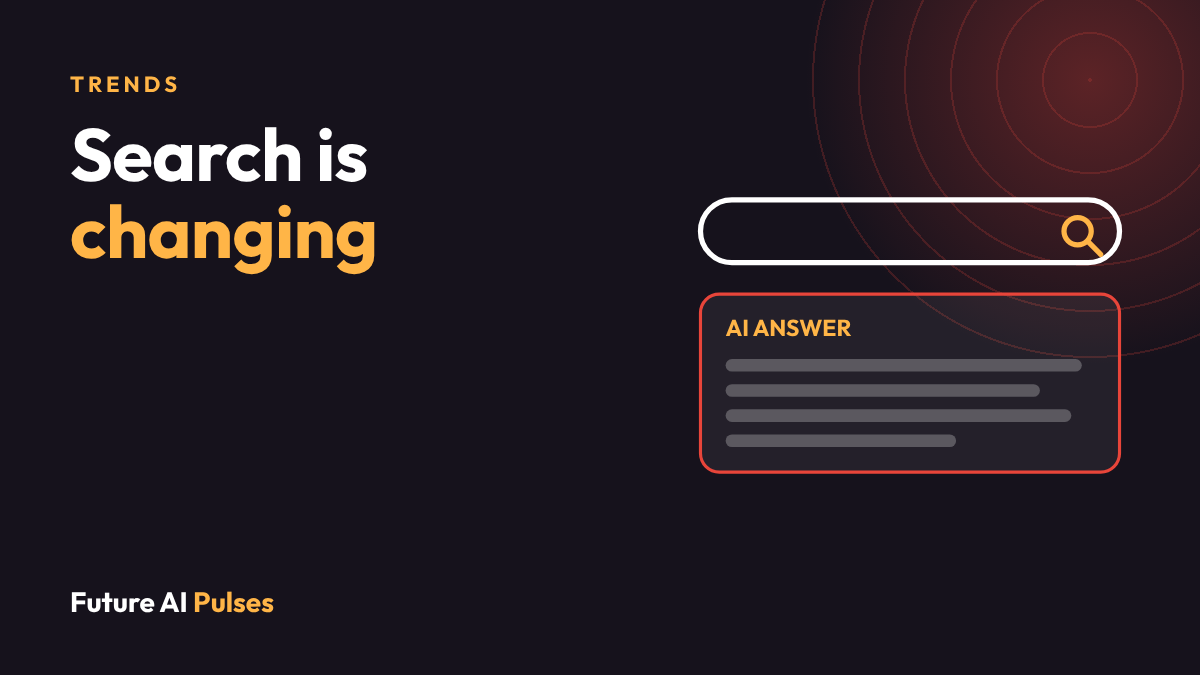
For twenty years, searching meant typing a few words and scanning a list of links. Increasingly, you get a written answer instead, put together by AI from several sources. It's faster. It also changes what you need to watch out for.
What's actually changing
Search engines now show AI-generated summaries above or instead of the usual results for many questions. AI assistants can also search the web themselves and reply with a written answer and a few source links. Some browsers and phones put an AI answer box front and centre.
The result: you click fewer links, and more of what you read has been summarised for you by an AI system.
Where AI answers shine
- Explanations: "What's the difference between a heat pump and an air conditioner?"
- Comparisons: pulling the pros and cons of several options into one place.
- Follow-up questions: you can ask "and what about for a small flat?" without starting again.
- Getting oriented in a topic you know nothing about.
Where to be careful
- Mixed-up sources. A summary can combine information from different places, dates or countries into one confident answer.
- Out-of-date details. Prices, opening hours, rules and product specs change. The summary may not have caught up.
- Missing nuance. Health, legal and money questions often depend on details a short answer leaves out.
- Fewer perspectives. One neat answer can hide the fact that experts disagree.
Four habits for better answers
- Open the sources that matter. If you're going to act on it, click through and check the source says what the summary claims.
- Add your context. "In Singapore", "for a beginner", "in 2026" or "for a family of four" changes the answer.
- Ask what's uncertain. Follow up with "what parts of this might be out of date or disputed?"
- Use official sites for official things. Government rules, visa requirements, medicine dosages and deadlines should come from the source.
A prompt to try
Answer this question: [question]. My situation: [location, timeframe, any relevant details]. Then list which parts of your answer I should verify, and the kind of official or primary source I should check them against.
The bottom line
AI answers are a great starting point and a poor finishing line. Use them to understand a topic quickly, then confirm anything you'll act on. Day 6 of our free course, The AI Habit, turns this into a two-minute routine.
Make AI a daily habit
The AI Habit is a 21-day course: one lesson, one prompt and one 10-minute task a day.
Get the course